It’s hard to think of Christmas without thinking of Christmas dinner, arguably the best meal of the year. However, …
The Royal Feast Began on Christmas Eve
Victoria and Albert’s Christmas feast in 1840 was certainly a sight to see. With such dishes as turtle soup and roast swan on the royal Christmas table accompanied by a baron of beef, which was famously Prince Albert’s favourite dish.
(Though not for the rest of the population). The roast swan was soon displaced by turkey as the dish for the rich. The royal feast was usually started on Christmas Eve and guests would enjoy the sweet treats that were hanging from the Christmas tree.
Christmas Dinner
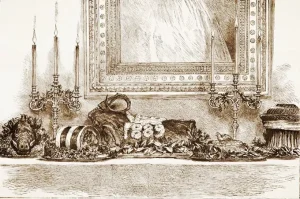
Christmas dinner would consist of a baron of beef, a Boar’s head and several fish dishes. Christmas desserts in the royal palace were mince pies and plum puddings. Seeing the name changed to Christmas pudding thanks to Victorian chef Eliza Acton. Another Victorian favourite was roasted chestnuts.
Almost Eaten to Extinction
Later on, we see turtle soup replaced by mock turtle soup, with ingredients like calf skull in a thin broth, as the turtle population was almost eaten to extinction by the rich members of society in places such as England and the new Americas.
In 1861 due to the premature death of Victoria’s beloved Prince Albert, the Christmas feast the royal family enjoyed was altogether a different affair. No longer the lavish spectacle that it once was.
From Windsor Castle to Osborne House
Festivities in 1894 saw the widowed Queen spending most of her time at Osborne House on the isle of Wight (one of Albert’s and Victoria’s favourite places). Since the kitchen at Osborne House was tiny in comparison to other palaces, the Christmas extravaganza was prepared at Windsor Castle and shipped over by royal yacht on Christmas Eve.
1894 Guest List
Her guests included on this occasion: her youngest daughter Princess Beatrice, Prince Henry of Battenberg and their four children. Along with Victoria’s son Prince Leopold, widowed Princess Helena, Duchess of Albany and their two children. The royal party sat down to dine at 9pm with adults only. Fine dining in the style of French cuisine was all the rage at the time for the rich. Queen Victoria was no exception, and all her chefs were very skilled with this style of cooking.
Although there are no drinks mentioned on the gilded invitations from the Christmas dinner of 1894, we can assume that this would be paired with wines fit for a Queen!
Christmas Dinner 1894
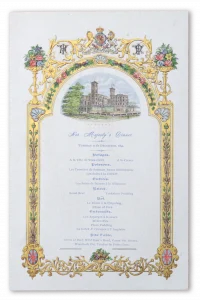
Let’s take a look what was on offer at the table of Queen Victoria and her party in 1894.
Her Majesty’s Dinner
Tuesday the 25th December 1894
First course (Calf skull in a thin broth) Ala Tete de Veau Claire
Carrot and Ham soup A la Cressy
Poissons Salmon slices in Hollandaise Les Tranches de Saumon sauce Hollandaise
Entrees
Les Pains de Faisan’s a la Milanaise
Releves Roast Beef Yorkshire puddings
Hot le dinde a la chiplate
Chine of pork
Entremets Les Asperges a la sauce
Mince pies
Plum Pudding
La Gelee d’ oranges a la anglaise
Side Table A Baron of Beef, Wild Boars Head, Game Pie, Brawn, Woodcock Pie, Terrine de Foie’s Gras.
Eat Fast or Don’t Eat At All
Famously when dining with the pint-sized queen you would have had to eat fast, as she had a small appetite. When she was done with her food it would swiftly be cleared away and onto the next course. Guests often left hungry.
From Prince Albert’s death and onward, Queen Victoria only wore black, and had the Prince’s clothes and place at the table prepped every day, this included the Christmas table. A custom that was carried on until her own death in 1901.
Christmas for the Middle and Working Classes
Middle class families would enjoy a huge feast with turkey and all the trimmings, including plum pudding. It would have been a slimmed dinner compared to the upper class but would also have some subtle differences. For instance, they would have had mostly beef or turkey. For some poor families it would have been rabbit or goose on the Christmas table; Turkey was for the middle classes.
Cooking the Goose
In the northern cities such as Leeds and Sheffield we would have seen the working-class folk cook their goose in bakeries. Many bakeries had to cook for villages and towns. They opened earlier in the morning and for a small charge. This was mainly due to the village folk at the time not having the equipment to cook their own joint for Christmas lunch. With the modern world catching up with Victorian Britain, and industries mass-producing many Christmas items. There was a goose club established in January so people could order their meat and pay throughout the year.
How Was Christmas in the Workhouse
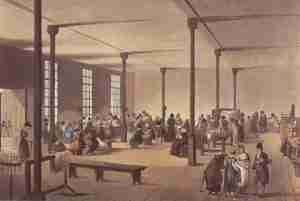
If you were unfortunate enough to be born or grow up in the workhouse, life was much different. 35,000 people in the workhouse were under the age of 12. Most worked morning till night, 7 days a week. They worked for no pay and small rations in putrid conditions. As if that wasn’t enough, it was considered a crime to be poor in Victorian times.
Please Sir, Can I Have Some More?
All year-round inmates would be given gruel or broth, and once a week they would have meat. So as not to use up their meat rations, the inmates were to forgo a meat portion the week before Christmas. They could then enjoy some goose on Christmas Day. Christmas was one of only two days off a year that they would get. As there were no Christmas holidays in Victorian England, the next day everyone was back to work.
Victorian Charity
For those in the workhouses their Christmas dinner was served by landowners and business owners, who would give up their Christmas day to help the poor. For this we can thank Charles Dickens, who highlights in detail the plight of the poor in his novel in 1843 of A Christmas Carol. This novella was a resounding success and lead the wealthy members of society to foster a sympathetic opinion of the poor and help those in need over the festive period.
Pantomime Trips
Some children of the workhouse were given trips to see the local pantomimes by their benefactors, workhouse children would also receive Christmas presents from the owners which would include toys, oranges and buns, which made for happier times. Gifts were also given to orphans or children on the street, and children from poor homes by visiting guardians.
Extra Food
There was a law passed in 1834 by the central authorities in London which ruled that no extra food or drink should be given on Christmas Day to the workhouse inmates. Luckily many local poor law unions ignored this. By 1840 the poor law commission had revised their earlier law that allowed extra treats to be supplied. their workhouse dining rooms would be decorated, and entertainment organized to ensure a festive day of celebration for inmates.
.